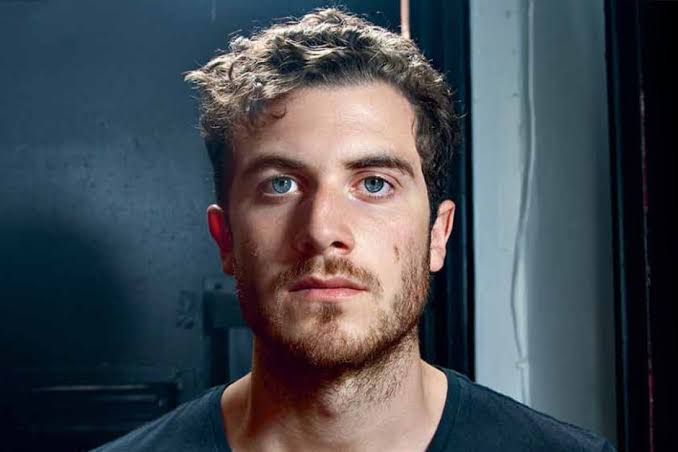
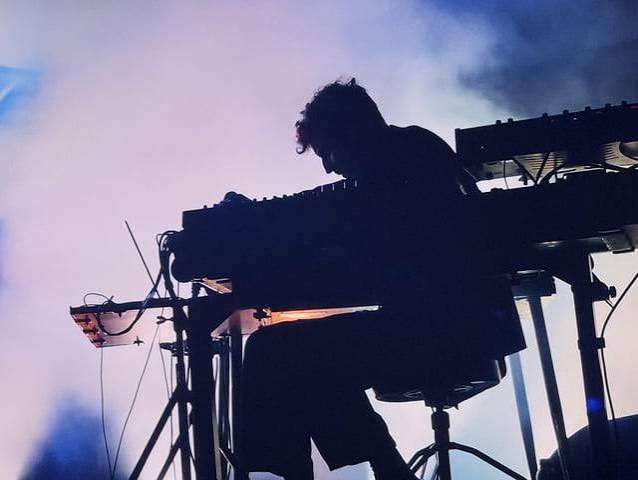
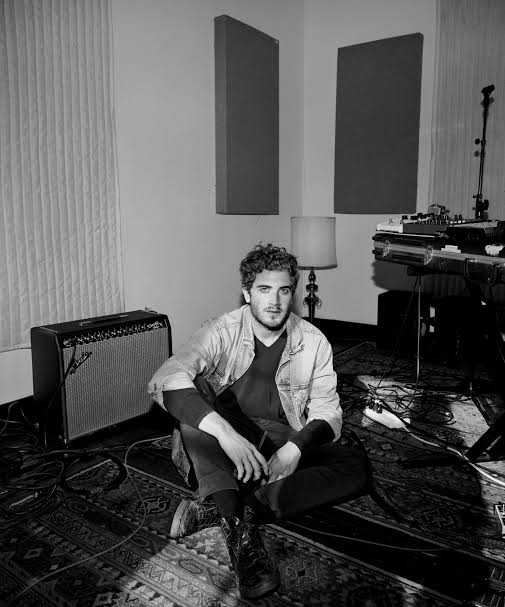
We had the honor to connect with musician and human rights advocate Nicolas Jaar (also of Darkside) following a sold out show in Portland. Read on as he shares his experiences in Palestine and his personal journey of using his voice.
Thank you for such a lovely and inspiring conversation Nico.
Edited for brevity.
CYM: Thank you for your time tonight Nicolas, and for using your platform in such an important way. Being in the audience, I felt that call to action and how it filled the room with hope. Thank you for raising awareness at a time when most would rather turn off their humanity. Especially under an administration that is actively funding these global genocides in real time, people are afraid to even think critically or speak out for what’s right. For me, it’s been lived experience that made me realize our liberation is bound together, since I was very young, but for someone who hasn’t been personally affected by injustice, racism, etc… I think it’s harder to create that understanding. It takes a tragedy to force someone to see something a different way.
Nicolas:There are limits to what people are able or willing to see, and it happens all the time. It’s interesting what you mentioned, that sometimes a tragedy is what forces you to see something, to make the connection between something you’ve read, something you’ve heard your friend talk about, seen with your eyes, maybe – it just goes deep, deeper, into the heart, into the soul, the gut, right?
For me, living in Palestine was transformative. Meeting friends there, living alongside them, and just seeing the reality on the ground from a very privileged perspective. That experience completely changed my worldview.
When I returned to my home country of Chile, I found myself looking at Santiago differently. I understood intellectually that the continent had been colonized, but being in Palestine made that history visceral. I began seeing the connections between colonialism, racism, and violence in a way I could no longer unsee.
For a long time, I felt like I had to apologize for my political views. You can feel like you’re the only crazy person in the room. Eventually I realized that if something comes from my gut and I believe it, I have to stand by it. It took me a long time to get there, and I’m embarrassed that it took so long, but now I feel that whenever I have a platform – I have to use it.
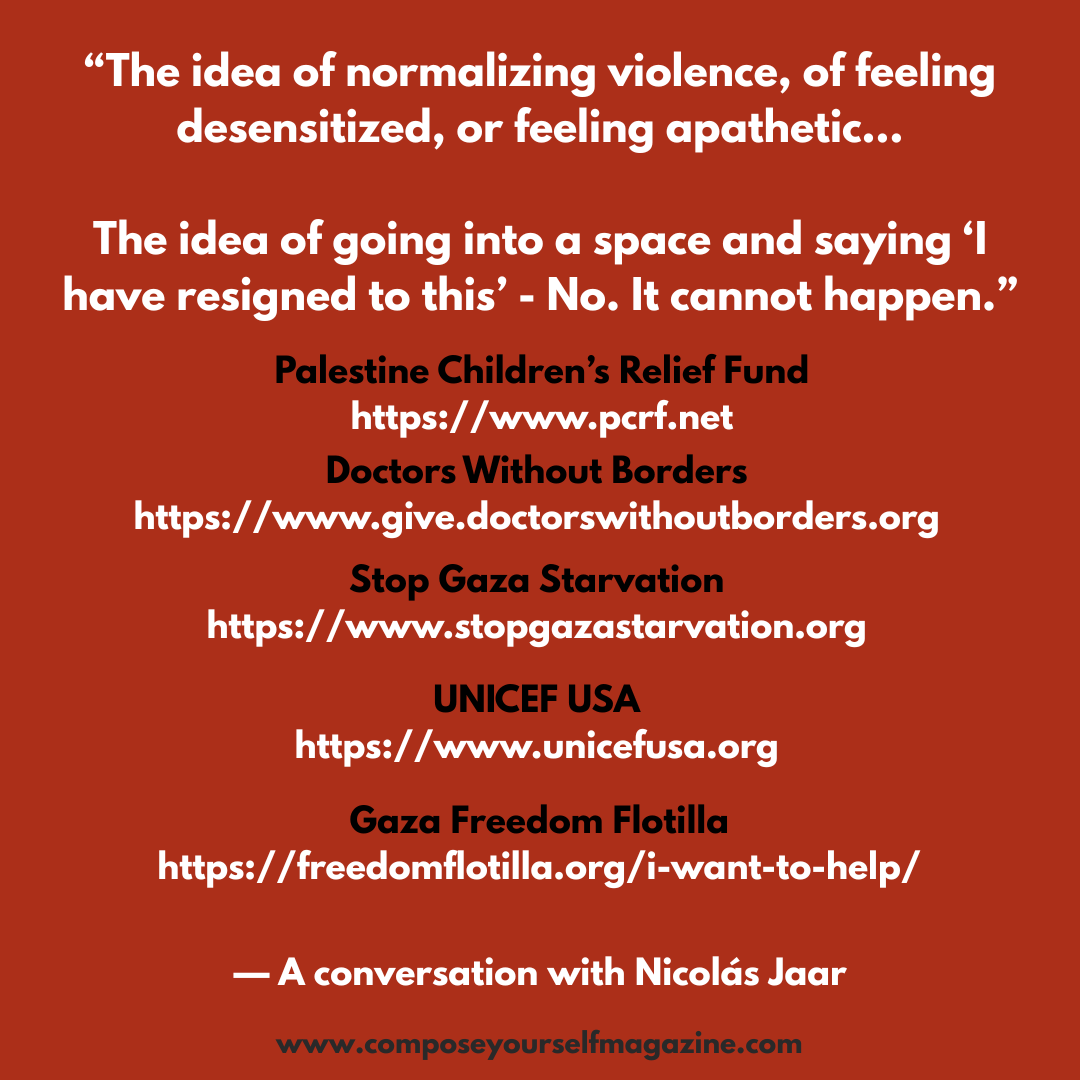
I don’t want to normalize what is happening in Palestine or here, or the way those things connect to the broader global military, carceral, and border systems. They all feed into one another and, to me, ultimately reinforce white supremacist ideology. I want to resist the normalization, desensitization, and apathy that allow those systems to continue. Every time I get on stage, I try to say something different depending on where I am emotionally. Sometimes it comes from anger; other times like tonight, it’s about love. But the goal is always to break through that apathy.